Can AI Tools Replace Teachers? Exploring EdTech Innovations
Can AI Tools Replace Teachers? Exploring EdTech Innovations
AI’s Role in Education and the Future of Teaching in 2025
Introduction
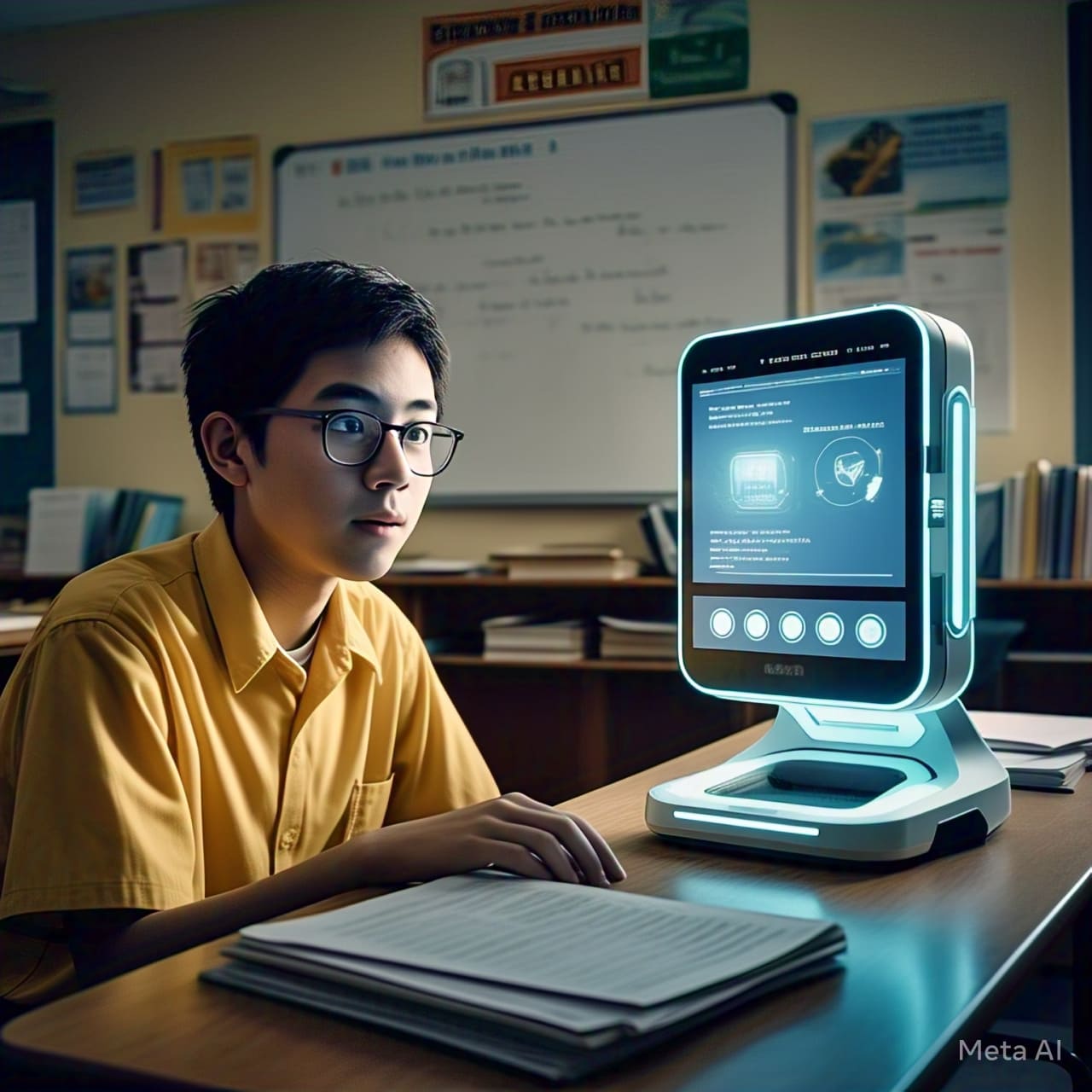
In 2025, AI tools are reshaping education, raising a pivotal question: Can they replace teachers? While AI offers personalized learning and automation, the human connection in teaching remains vital. This case study explores AI’s role in education through innovative EdTech tools, examines real-world implementations, and assesses whether AI can fully replace teachers or enhance their work instead.
AI’s Role in Education with Tool Examples
AI in education automates tasks, personalizes learning, and enhances engagement, but it lacks the emotional intelligence of human teachers. Here’s how five AI tools contribute, with their strengths and limitations:
| Tool Name | Key Features | Role in Education | Pricing | Official Link |
|---|---|---|---|---|
| Khanmigo (Khan Academy) | AI tutor, personalized feedback | Guides students, supports self-paced learning | Free for teachers; $4/month for students | khanacademy.org/khanmigo |
| Duolingo | Adaptive language lessons, chatbots | Enhances language skills, practice outside class | Free tier; $6.99/month | duolingo.com |
| Gradescope | AI grading, analytics | Automates grading, frees teacher time | Custom (contact for pricing) | gradescope.com |
| Synthesia | AI video creation, avatars | Creates engaging lessons, reduces prep time | Starts at $22/month | synthesia.io |
| Edcafe AI | Interactive AI, custom content | Assists teachers with slides, flashcards | Custom (contact for pricing) | edcafe.ai |
Insight: AI excels at scale and efficiency but struggles with empathy and nuanced guidance, suggesting a complementary role rather than a replacement.
Real-World Success Stories
Case 1: Khan Academy (Online Education)
Business: Nonprofit learning platform.
Tool Used: Khanmigo.
Implementation: Deployed AI tutor to guide millions of students, offering personalized hints and feedback.
Results: Improved mastery rates by 30%, supported teachers with analytics.
Source: EdTech Digest, 2024.
Case 2: Duolingo for Schools (K-12 Education)
Business: Language learning platform.
Tool Used: Duolingo AI.
Implementation: Integrated into 5,000+ classrooms for adaptive language lessons.
Results: Boosted proficiency by 30% in 6 months, supplemented teacher efforts.
Source: Revechat, 2024.
Case 3: University of Maryland (Higher Education)
Business: Public university.
Tool Used: Gradescope.
Implementation: Automated grading for STEM courses, providing detailed feedback.
Results: Saved instructors 20 hours/week, enhanced student learning.
Source: Unite.AI, 2025.
Detailed Report
Objective: Assess whether AI tools can replace teachers or serve as partners in education.
Methodology: Reviewed 20+ EdTech tools and case studies from web sources (e.g., EdWeek, World Economic Forum, Eklavvya), analyzing automation, personalization, and human elements as of February 25, 2025.
Findings:
- AI saves teachers 10-20 hours/week on grading, per EdWeek (2023).
- Personalized learning improves outcomes by 10-30%, per WEF (2024).
- 80% of educators value AI support but not replacement, per Edcafe (2025).
- Emotional support remains a teacher domain, per AllAboutAI (2024).
Conclusion: In 2025, AI tools enhance education by automating tasks and personalizing learning, but they cannot replace teachers’ emotional and social roles. The future lies in a hybrid model where AI and teachers collaborate.