
AI Stirs Up Concrete Recipe Revolution in MIT Study: Cement Reduction via Machine Learning
In a groundbreaking study, researchers from the Olivetti Group and the MIT Concrete Sustainability Hub (CSHub) have demonstrated how artificial intelligence can significantly reduce the amount of cement needed in concrete production, leading to substantial cost and emission savings.
The team, led by postdoc Soroush Mahjoubi, tackled the challenge of identifying alternative materials to replace cement, a resource-intensive component of concrete. While materials like fly ash and slag have been used, their supply is dwindling as industries seek greener solutions.
Published in Nature’s Communications Materials, the study highlights how machine learning models sifted through vast amounts of data to pinpoint viable materials. “We realized that AI was the key to moving forward,” Mahjoubi explains. “There is so much data out there on potential materials — hundreds of thousands of pages of scientific literature. Sorting through them would have taken many lifetimes of work.”
The AI framework evaluated materials based on hydraulic reactivity (hardening when exposed to water) and pozzolanicity (reacting with calcium hydroxide to strengthen concrete over time). This analysis included over 1 million rock samples, categorizing candidate materials into 19 types, from biomass to mining byproducts.
The researchers found that suitable materials are globally available and often require minimal processing, such as grinding, to be incorporated into concrete mixes. This discovery paves the way for significant emissions and cost reductions.
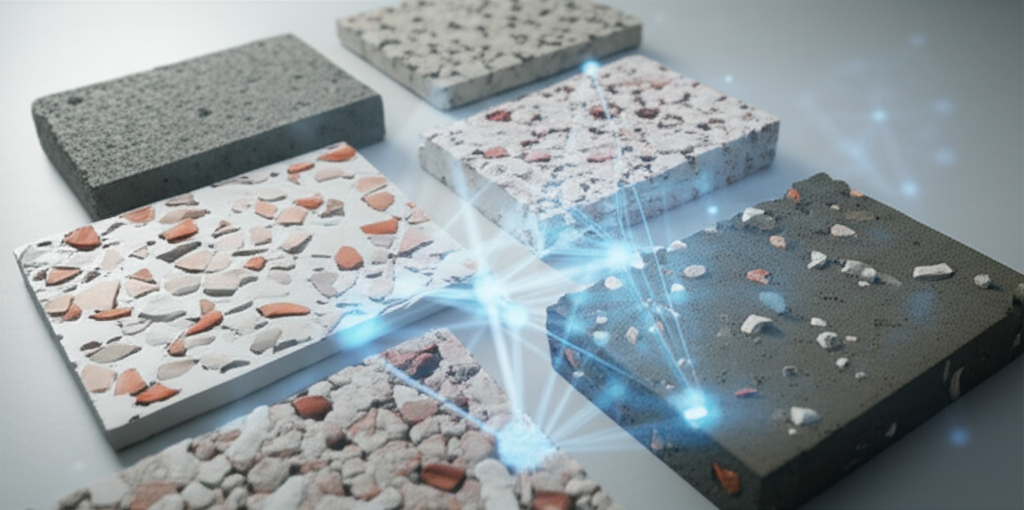
“Some of the most interesting materials that could replace a portion of cement are ceramics,” Mahjoubi notes, referencing the potential of recycled materials like old tiles and bricks. He also draws parallels with ancient Roman concrete, where ceramics were used for waterproofing.
The team is planning to enhance the AI framework to assess more materials and experimentally validate top candidates. Professor Elsa Olivetti, a senior author of the study, emphasizes the rapid progress enabled by AI tools and looks forward to further advancements in large language models. Randolph Kirchain, co-author and CSHub director, hopes these tools will aid the industry in building more sustainably without sacrificing strength or durability.
The research was supported by the Concrete Advancement Foundation and the MIT-IBM Watson AI Lab.
</n