AI Model Predicts Chemical Reaction’s Transition State in Under a Second
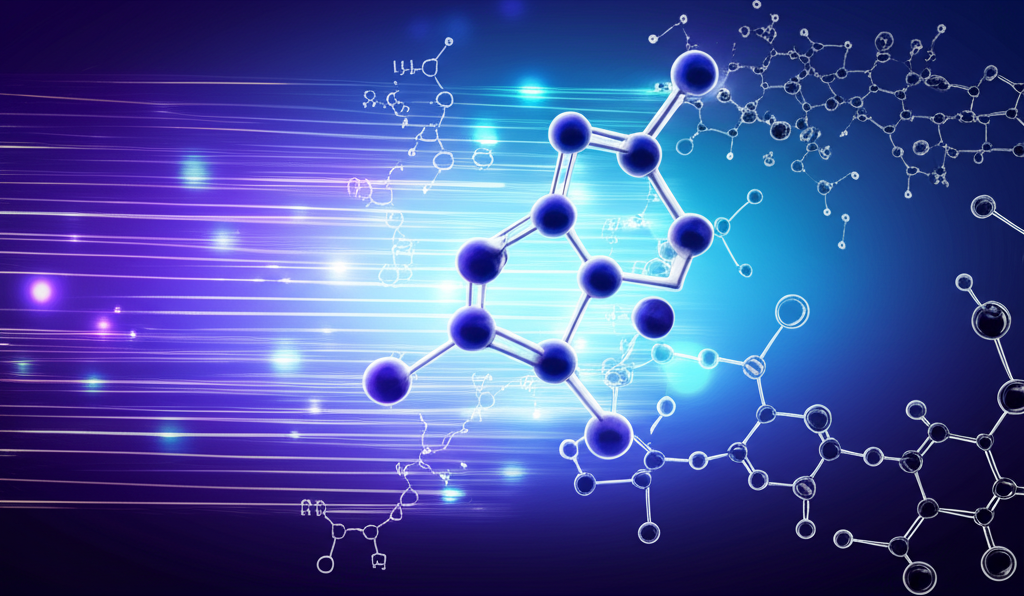
Chemists designing new chemical reactions can now leverage a groundbreaking machine-learning model developed by MIT researchers. This model accurately predicts a chemical reaction’s transition state – the critical juncture beyond which the reaction is irreversible – in under a second.
Understanding the transition state is crucial for optimizing reaction conditions and achieving desired outcomes. Traditional methods for predicting this state are computationally intensive and time-consuming. The new AI model offers a rapid and accurate alternative, potentially accelerating the discovery and design of new pharmaceuticals, fuels, and other valuable compounds.
Heather Kulik, the Lammot du Pont Professor of Chemical Engineering and professor of chemistry at MIT, emphasizes the importance of this advancement: “We’d like to be able to ultimately design processes to take abundant natural resources and turn them into molecules that we need, such as materials and therapeutic drugs. Computational chemistry is really important for figuring out how to design more sustainable processes to get us from reactants to products.”
The research, led by former MIT graduate student Chenru Duan, former Georgia Tech graduate student Guan-Horng Liu, and Cornell University graduate student Yuanqi Du, is detailed in a paper published in Nature Machine Intelligence. The model, named React-OT, significantly improves upon previous machine-learning strategies by using linear interpolation to estimate the transition state. This allows for more accurate predictions with fewer computational steps.
React-OT requires only about five steps and 0.4 seconds to make a prediction, which is approximately 25% more accurate than earlier models. This enhanced efficiency and accuracy makes React-OT a practical tool for integrating into existing high-throughput computational workflows, enabling chemists to quickly generate optimal transition state structures.
The model was trained on a dataset of 9,000 chemical reactions involving small organic and inorganic molecules. It demonstrated strong performance not only on reactions within the training set but also on reactions with larger reactants and side chains. This versatility underscores its potential for application across a wide range of chemical processes, including polymerization reactions.
Kulik notes, “Having a model that generalizes across different system sizes means that it can tackle a wide array of chemistry.” The researchers are currently expanding the model’s capabilities to predict transition states for reactions involving additional elements like sulfur, phosphorus, chlorine, silicon, and lithium.
Markus Reiher, a professor of theoretical chemistry at ETH Zurich, who was not involved in the study, commented, “To quickly predict transition state structures is key to all chemical understanding. The new approach presented in the paper could very much accelerate our search and optimization processes, bringing us faster to our final result. As a consequence, also less energy will be consumed in these high-performance computing campaigns. Any progress that accelerates this optimization benefits all sorts of computational chemical research.”
To facilitate the use of this technology, the MIT team has developed an app where scientists can input reactant and product information to generate the transition state and estimate the energy barrier of their intended reaction.