
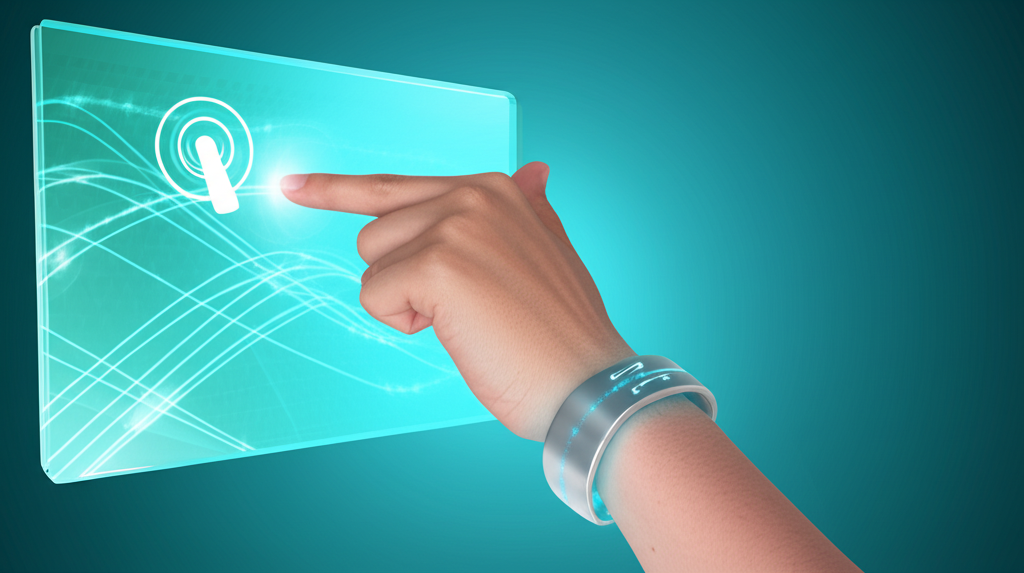
Meta Researchers Unveil Groundbreaking Gesture-Controlled Wristband for Seamless Computer Interaction
In a significant leap forward for human-computer interaction, researchers at Meta are developing a revolutionary wristband designed to empower users to control computers through intuitive hand gestures. This innovative device promises to redefine accessibility, allowing individuals to effortlessly navigate cursors, launch applications, and even compose messages by simply ‘writing’ in the air.
At the core of Meta’s pioneering wristband is a sophisticated technique known as surface electromyography (sEMG). As detailed in a research paper published in the prestigious journal Nature, sEMG technology precisely detects the faint electrical signals generated by muscle activity. This allows the wristband to interpret a user’s intended movements, often even before the physical action fully manifests, creating a truly predictive and responsive interface.
The primary vision behind this development is to provide less intrusive and more natural tools for computer interaction, particularly for individuals living with motor disabilities. The implications for accessibility are profound, offering new avenues for independence and engagement.
Further demonstrating its commitment to real-world impact, Meta has partnered with Carnegie Mellon University to conduct extensive testing of the wristband. This collaborative effort focuses on working with individuals who have spinal cord injuries, enabling them to operate computers even when full use of their arms or hands is limited. Professor Douglas Weber from Carnegie Mellon’s Department of Mechanical Engineering and Neuroscience Institute highlights the device’s remarkable capability: it can interpret intended actions even from individuals with complete hand paralysis, as some muscle activity often persists.
This gesture-controlled wristband presents a pragmatic and immediately deployable alternative to more invasive technologies. Unlike Elon Musk’s Neuralink, which seeks to implant brain chips for severe paralysis, or other non-invasive methods like electroencephalogram (EEG) headsets that are constrained by weaker signals, Meta’s solution is designed for immediate use without surgical intervention. Furthermore, its reliance on sEMG signals allows it to operate at a significantly higher frequency than traditional EEG, promising superior responsiveness and precision.