The Uproar Over Vogue’s AI-Generated Ad Isn’t Just About Fashion
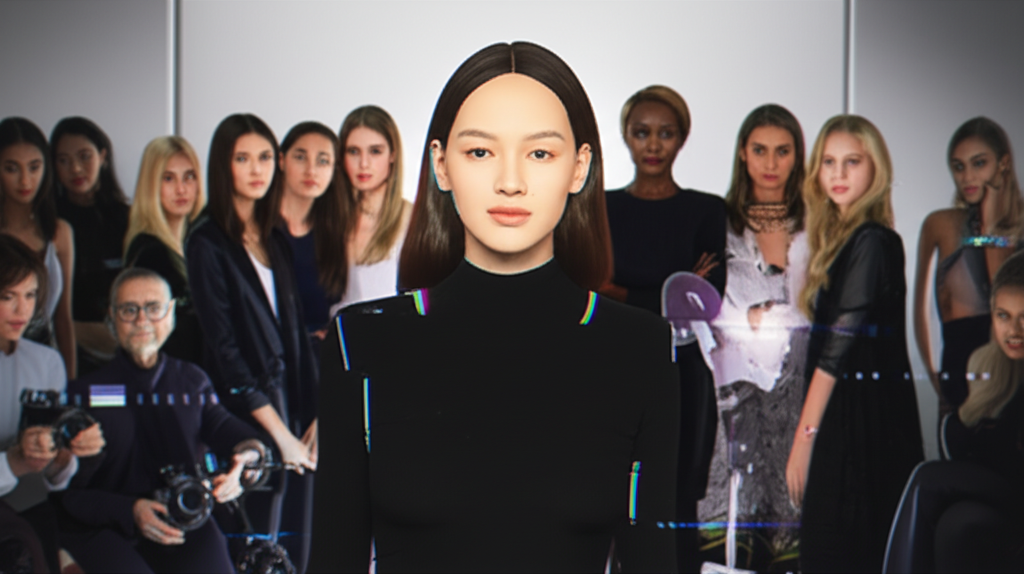
The fashion industry is grappling with a new wave of controversy as artificial intelligence begins to permeate its traditionally human-centric world, sparking debate about authenticity, representation, and the future of creative professions. The latest flashpoint ignited over Vogue’s July print edition, which featured a Guess ad showcasing a seemingly flawless blonde model – a creation entirely generated by AI.
This instance echoes earlier concerns, such as when Levi’s partnered with Lalaland.ai in 2023 to create “diverse” digital fashion models. Commercial model Sarah Murray recalled her feeling of sadness and exhaustion upon seeing these AI models, describing the situation as “artificial diversity” and expressing worries about competing with AI-generated standards of perfection. Her concerns have intensified, as brands continue to experiment with AI models, much to the consternation of many.
The inclusion of the AI-generated model in Vogue, a publication often seen as dictating industry standards, sent ripples across the internet. While Vogue stated the ad met its advertising standards, many view the distinction between an advertisement and an editorial spread as negligible. TechCrunch spoke with models, experts, and technologists to gauge the industry’s trajectory.
The core of the debate centers on the implications of AI’s ability to produce high-quality creative work at a fraction of the time and cost of human labor. Questions arise about the role of human professionals – models, photographers, stylists, and set designers – in an increasingly automated creative landscape.
“It’s just so much cheaper”
Sinead Bovell, a model and founder of the WAYE organization, who previously wrote about CGI models for Vogue, highlighted that “e-commerce models” are particularly vulnerable to automation. These models, who display clothing and accessories for online shoppers, represent the primary income source for many models, offering financial security over high-fashion prestige.
“E-commerce is where most models make their bread and butter,” Bovell told TechCrunch. “It’s not necessarily the path to model fame or model prestige, but it is the path for financial security.”
The economic argument is compelling. Art technologist Paul Mouginot noted that working with live models is expensive, especially when numerous garments and accessories need to be photographed. AI allows brands to create photorealistic virtual models in coherent settings, producing images that mimic genuine fashion editorials efficiently.
Brands have been leveraging virtual mannequins and AI models for years, with companies like Veepee, H&M, Mango, and Calvin Klein experimenting with the technology. Fashion writer Amy Odell succinctly stated, “It’s just so much cheaper for [brands] to use AI models now. Brands need a lot of content, and it just adds up. So if they can save money on their print ad or their TikTok feed, they will.”
PJ Pereira, co-founder of AI ad firm Silverside AI, emphasized the need for scale. With the shift from producing four major content pieces annually to potentially hundreds of thousands for social media and e-commerce, AI offers a solution that process tweaks alone cannot provide. Pereira noted that while people often assume AI aims to take jobs from artists and models, his experience suggests otherwise.
From “diverse” models to AI avatars
Sarah Murray, however, remains concerned about the ethical implications, particularly regarding the authenticity of representation. She pointed out that brands claiming AI supplements human talent often overlook the vast pool of eager human models who would readily work with them.
“If those [brands] ever had the opportunity to stand in line at an open casting call, they would know about the endless amounts of models, including myself, that would dream of opportunities to work with their brands,” Murray said. “They would never need to supplement with anything fake.”
This shift is expected to disproportionately affect “non-traditional” or diverse commercial models. Murray highlighted Levi’s use of AI for diversity as a prime example of artificial representation replacing genuine talent. Bovell termed this practice “robot cultural appropriation,” where brands can generate specific identities to craft a narrative without genuine representation.
While Pereira argues it’s impractical to photograph every garment on every model type, this reasoning does not assuage the fears of many diverse models. “We already see an unprecedented use of certain terms in our contracts that we worry indicate that we are possibly signing away our rights for a brand to use our face and anything recognizable as ourselves to train their future AI systems,” Murray shared.
Sara Ziff, former model and founder of the Model Alliance, is advocating for the Fashion Workers Act to ensure models give explicit consent and receive compensation for the use of their digital likenesses. Paul Mouginot suggested this could allow models to earn additional income by licensing their likeness for multiple digital shoots, but cautioned that hiring avatars can still mean fewer opportunities for human models.
“What few players gain can mean fewer opportunities for many others,” Mouginot stated. Bovell advised models to leverage their personal brands and explore new revenue streams like podcasting or endorsements, emphasizing the need to “tell your unique human story,” something AI can never replicate.
Room for another view
Paul Mouginot envisions a future where some platforms may cease working with human models entirely, yet acknowledges a persistent human desire for “sensual reality, a touch of imperfection, and human connection.” He noted that unique, slightly imperfect traits are often what make models stand out, qualities that are difficult for AI to capture.
Sandrine Decorde, CEO of AI studio Artcare, sees her firm as “AI artisans” who fine-tune AI models with unique human touches. Her company often produces AI-generated babies and children for brands, an area where AI offers ethical advantages over the historical exploitation often seen with child labor in fashion.
“It’s like sewing; it’s very delicate,” Decorde said, highlighting the meticulous process of dataset refinement for AI models. She pointed out that many AI-generated models, including those used in the Vogue Guess ad by Seraphinne Vallora, can be homogenous, with overly perfect features.
“Imagery needs to make an impact,” Decorde stated, noting that brands often seek exclusive relationships with certain models, a preference that extends to AI. PJ Pereira added that his firm combats homogeneity by being intentional in their prompting and training data, warning that unchecked AI can amplify existing biases.
An AI future is promised, but uncertain
Claudia Wagner, founder of the modeling booking platform Ubooker, considers AI modeling technology to be in an experimental phase. She found the Vogue Guess ad technically interesting but lacking impact. “We’re all in a phase of testing and exploring what AI can add — but the real value will come when it’s used with purpose, not just for visibility,” she commented.
Pereira shared an anecdote about a fully AI-generated product video on TikTok that garnered over a million views, despite negative comments, demonstrating significant underlying engagement and a substantial increase in product sales. This suggests that while AI-generated content might face criticism, it can still drive business results.
Pereira anticipates AI’s integration into creative workflows, noting brands have varied approaches: some use fully artificial models, others license real people’s likenesses for synthetic shoots, and some remain hesitant due to audience reception.
Wagner emphasized that human talent remains crucial, particularly for brands emphasizing authenticity and identity. While many high-fashion brands are experimenting quietly, most are still defining their AI policies, leading to caution regarding fully AI-generated people, making Vogue’s inclusion notable.
Bovell pondered if Vogue’s decision was a test of public reaction to merging high fashion with AI. Odell suggested that Vogue’s endorsement could legitimize AI models in fashion, similar to its past acceptance of previously controversial figures.
The industry waits to see how brands and consumers will ultimately embrace or reject the increasing presence of AI in fashion, a conversation that continues to evolve.