
Hubble Network plans massive satellite upgrade to create global Bluetooth layer
Hubble Network Plans Massive Satellite Upgrade to Create Global Bluetooth Layer
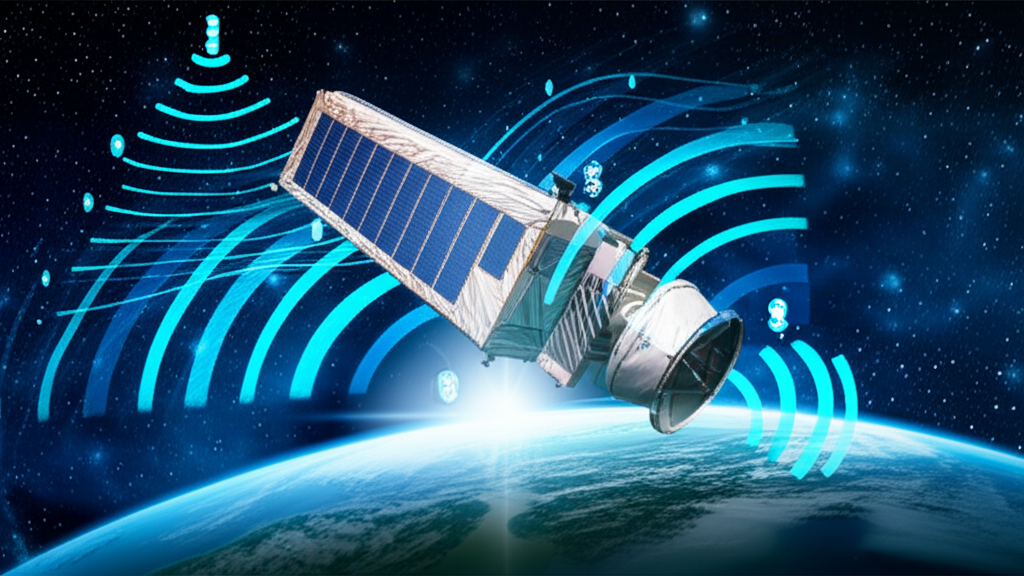
Hubble Network, a leading innovator in satellite-powered connectivity, is embarking on a significant expansion of its network. The company plans a substantial upgrade to its satellite constellation, aiming to establish a pervasive “Bluetooth layer around the Earth.” This ambitious project is designed to enable seamless device connectivity on a global scale, even in remote and underserved areas.
The Seattle-based startup, focused on bringing enterprise-grade asset tracking capabilities comparable to Apple’s Find My service, has developed a sophisticated new phased-array receiver. This advanced payload will be integrated into two massive new satellites, named MuSat XL, from Muon Space, a four-year-old aerospace company. These next-generation satellites are slated for launch in 2027.
According to Hubble, the MuSat XL satellites will offer a global revisit time of 12 hours. Significantly, they will be capable of detecting Bluetooth Low Energy (BLE) signals at power levels that are 30 times lower than current benchmarks. If these projections hold true, this technological leap could lead to a substantial extension of battery life for tracking tags and sensors deployed across various industries.
The first two MuSat XL spacecraft are set to form the core infrastructure for Hubble’s BLE Finding Network, targeting enterprises in sectors including logistics, infrastructure management, and defense.
Hubble Network made history in 2024 by becoming the first entity to establish a direct Bluetooth connection from a device to a satellite. The startup’s compelling proposition is that businesses will no longer need to invest in specialized hardware; instead, they can integrate their devices’ existing chipsets with a specific firmware to enable connectivity to the Hubble network. This approach promises extensive global visibility, including in areas lacking traditional infrastructure, and offers a developer-friendly platform for companies to track their assets without building additional infrastructure.
The company currently operates seven satellites and has set an ambitious target of having 60 satellites in operation by 2028. Hubble CEO Alex Haro indicated that the long-term strategy involves upgrading the entire constellation to larger platform buses to capitalize on their enhanced power and performance capabilities.
Hubble selected Muon Space as a partner for this upgrade due to Muon’s proven ability to rapidly scale manufacturing. Muon Space, having recently secured $146 million in Series B funding, is establishing a production facility in San Jose designed to support the manufacturing of over 500 spacecraft annually by 2027.
Hubble is the inaugural customer for Muon Space’s 500 kilogram-class MuSat XL satellite platform. Muon states that this platform can deliver multi-kilowatt power to payloads, feature optical crosslinks, support high-volume data downlink, and provide “near real-time” communications essential for time-sensitive missions. Gregory Smirin, president of Muon Space, commented that the XL platform is perfectly suited for programs like the Space Development Agency’s (SDA) initiative to build a missile defense constellation in low Earth orbit, reflecting the evolution of their technical capabilities and their growing role in delivering multi-mission spacecraft.
Muon Space operates on a “space-as-a-service” model, encompassing the design, build, and operation of satellites through a vertically integrated hardware and software stack called Halo. This model aims to democratize space access for companies with innovative payloads but without the resources to develop underlying satellite architecture. Essentially, Hubble can concentrate on refining its BLE network technology while Muon manages the satellite platforms and mission operations.
TechCrunch Event Announcement:
Tech and VC heavyweights join the Disrupt 2025 agenda. Netflix, ElevenLabs, Wayve, Sequoia Capital — just a few of the heavy hitters joining the Disrupt 2025 agenda. They’re here to deliver the insights that fuel startup growth and sharpen your edge. Don’t miss the 20th anniversary of TechCrunch Disrupt, and a chance to learn from the top voices in tech — grab your ticket now and save up to $675 before prices rise on August 7.
Location: San Francisco | Date: October 27-29, 2025
Register Now: https://techcrunch.com/events/tc-disrupt-2025/