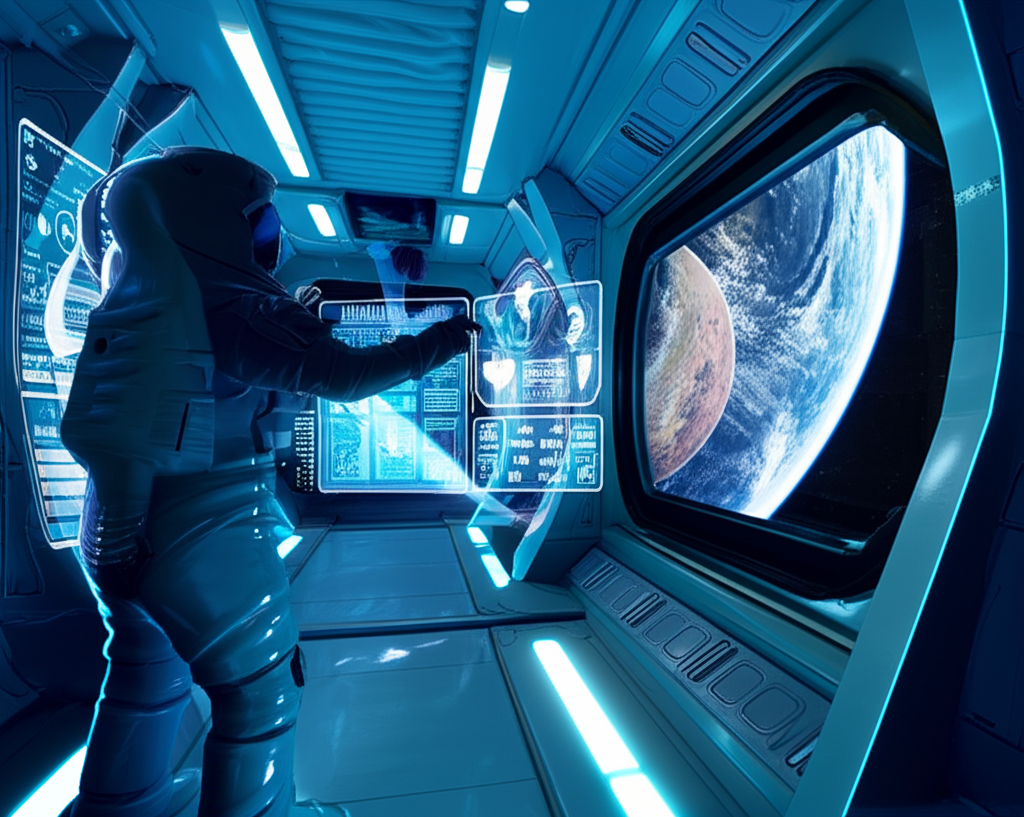
NASA and Google are building an AI medical assistant to keep Mars-bound astronauts healthy
As human spaceflight missions grow longer and travel farther from Earth, keeping crews healthy becomes increasingly challenging.
Astronauts aboard the International Space Station currently rely on real-time calls to mission control, regular deliveries of medical supplies, and the possibility of a swift return to Earth after shorter missions. However, NASA and its commercial partners are planning extended-duration missions to the Moon and Mars, which will fundamentally alter these support systems.
This evolving reality is driving NASA to develop on-orbit medical care that is more “Earth-independent.” A key initiative in this effort is a proof-of-concept AI medical assistant being developed in partnership with Google. This tool, named the Crew Medical Officer Digital Assistant (CMO-DA), is engineered to assist astronauts in diagnosing and treating symptoms when direct medical support from Earth is unavailable or communications are interrupted.
The CMO-DA is a multimodal tool, designed to process and interact through speech, text, and images. It operates within Google Cloud’s Vertex AI environment, harnessing powerful AI models.
The project operates under a fixed-price subscription agreement with Google Public Sector, covering cloud services, application development infrastructure, and model training. NASA maintains ownership of the application’s source code and plays a vital role in fine-tuning the AI models. The Google Vertex AI platform provides access to a range of models from Google and other third-party providers.
To assess its capabilities, the CMO-DA has been tested against three simulated medical scenarios: an ankle injury, flank pain, and ear pain. A panel comprising three physicians, including an active astronaut, evaluated the assistant’s performance across initial evaluation, patient history gathering, clinical reasoning, and treatment planning.
The physician panel reported a high degree of diagnostic accuracy. The assistant’s evaluation and treatment plan for flank pain were judged to be 74% likely correct, for ear pain 80% likely correct, and for the ankle injury, 88% likely correct.
NASA scientists have outlined an incremental roadmap for the AI assistant’s development in a slide deck. Future plans include integrating additional data sources, such as real-time medical device feeds, and enhancing the model’s “situational awareness” to specifically address space medicine conditions like microgravity.
While Google has not provided specifics on pursuing regulatory clearance for potential terrestrial applications, the validation of this AI model on orbit could pave the way for its use in doctor’s offices on Earth. The advancements made with CMO-DA could also yield broader applications in healthcare, improving health outcomes beyond space exploration.