

GOOGLE AI TOOLS DIRECTORY 2025
GOOGLE AI TOOLS DIRECTORY 2025: THE COMPLETE GUIDE TO ALL PLATFORMS, SKILLS & FUTURE JOBS.
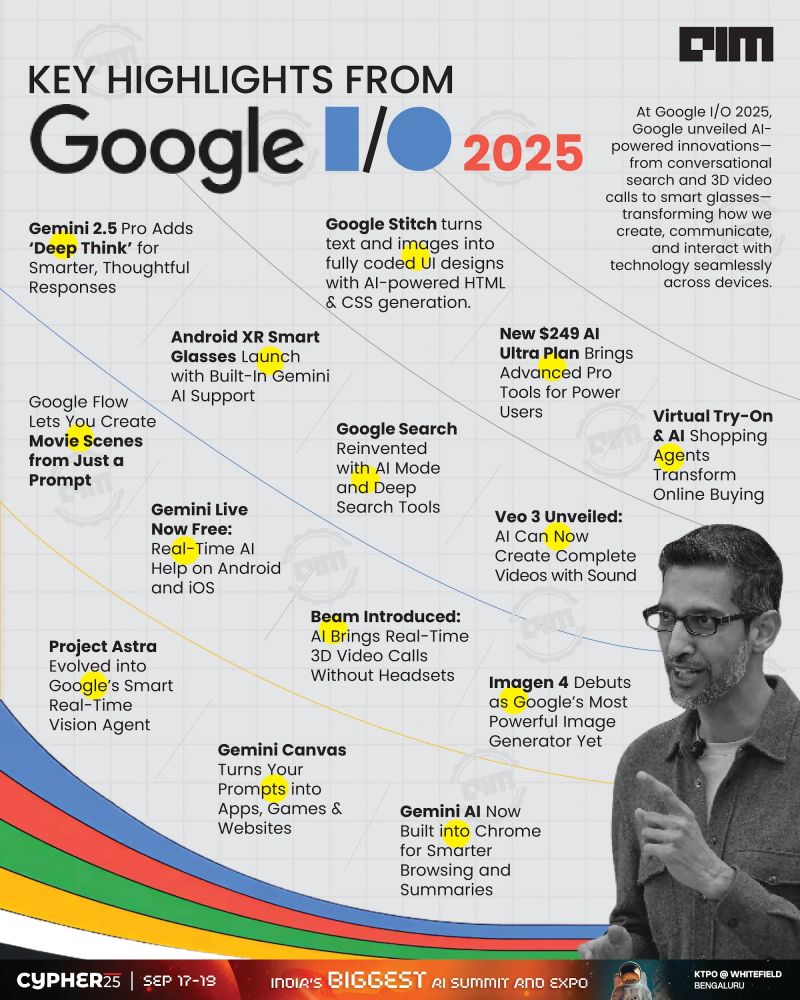
Google has transitioned from a search and advertising giant into one of the world’s dominant AI infrastructure providers, powering everything from mobile devices to enterprise automation to robotics and scientific discovery. With foundation models like Gemini, creative models like Imagen and Veo, research engines like NotebookLM, developer tools like AI Studio and Project IDX, and enterprise-grade systems like Vertex AI, Google is building an ecosystem designed to support future work, future learning, and future careers.
This directory is not just a list.
It is a complete learning and career blueprint—a master guide that explains:
- Every Google AI tool, platform, and model
- What each one does
- How they integrate
- How to learn them
- Skill roadmaps
- Use cases
- AI agents and workflow automation
- Career paths created by Google AI
- The exact prerequisites to start
- Future jobs expected from 2025–2035
This is your all-in-one pillar page from ProAITools.net.
The Entire Google AI Universe: A Full Overview (With All Products)
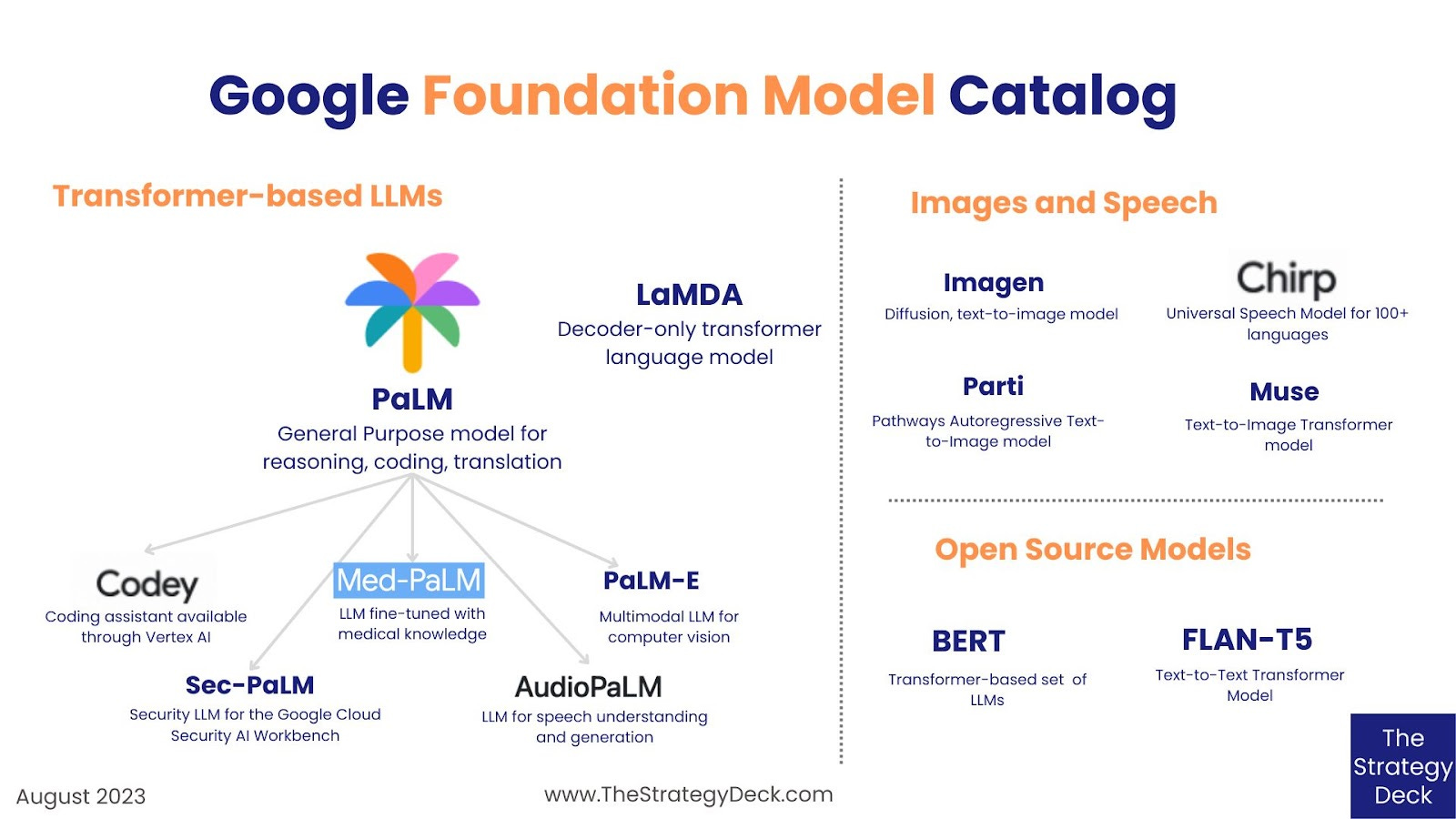
Google AI is organized across seven layers, each powering a different segment of the world’s AI economy:
1. Core Foundation Models

- Gemini (Ultra, Pro, Flash, Nano, Live)
- Imagen (image generation)
- Veo (video generation)
- MusicLM (music generation)
- Chirp (speech models)
- Med-Gemini (medicine)
- Gemma (open-source models: 2B, 9B, 27B)
- PaliGemma (vision-language)
- GraphGemma (graph reasoning)
2. Developer AI Platforms
- Google AI Studio
- Project IDX
- Google Colab / Colab Pro
- Kaggle AI
- TensorFlow
- JAX
- TFX
- MediaPipe
3. Enterprise AI Platforms
- Vertex AI
- Document AI
- Contact Center AI (CCAI)
- BigQuery ML
- Looker AI
- Vertex AI Agents (latest)
4. Creative AI Platforms
- Imagen
- Veo
- MusicLM
- YouTube Create
- Dream Screen
- AI Effects Tools
5. Productivity & Knowledge AI
- NotebookLM
- Google Workspace AI
- Chrome AI
- Android AI
- Pixel AI
6. Consumer AI Tools
- Google Search AI (SGE)
- Google Maps AI
- Google Photos AI
- Gemini App
7. Experimental + Deep Research Platforms
- Antigravity (2025 release)
- UniSim (3D world simulation)
- RT-X (robotics AI transformer)
- AlphaFold
- AlphaTensor
- AlphaGeometry
- MedPaLM
This structure forms the backbone of all AI innovation happening inside Google.
Now we break down each segment in full detail, with descriptions.
Google Core AI Models
2.1 Gemini Foundation Models (Ultra, Pro, Flash, Flash Lite, Nano, Live)
Google’s multimodal AI models trained to understand:
- Text
- Images
- Audio
- Video
- Code
- Speech
- Real-time interactions
Gemini Ultra 1.5

Google’s most powerful reasoning model.
Ideal for: enterprise AI, agents, long-context tasks, advanced research.
Gemini Pro 1.5
Balanced model for apps, productivity, and daily workflows. Powers Gemini App.
Gemini Flash & Flash Lite
Ultra-fast, cost-efficient models for:
- Social content
- Chatbots
- Automations
- Real-time apps
- High-volume tasks
Gemini Nano
On-device AI running directly on Android / Pixel.
Gemini Live
Real-time voice-based multimodal AI with conversation abilities.
2.2 Imagen Models (Imagen 3) – Text-to-Image Generation
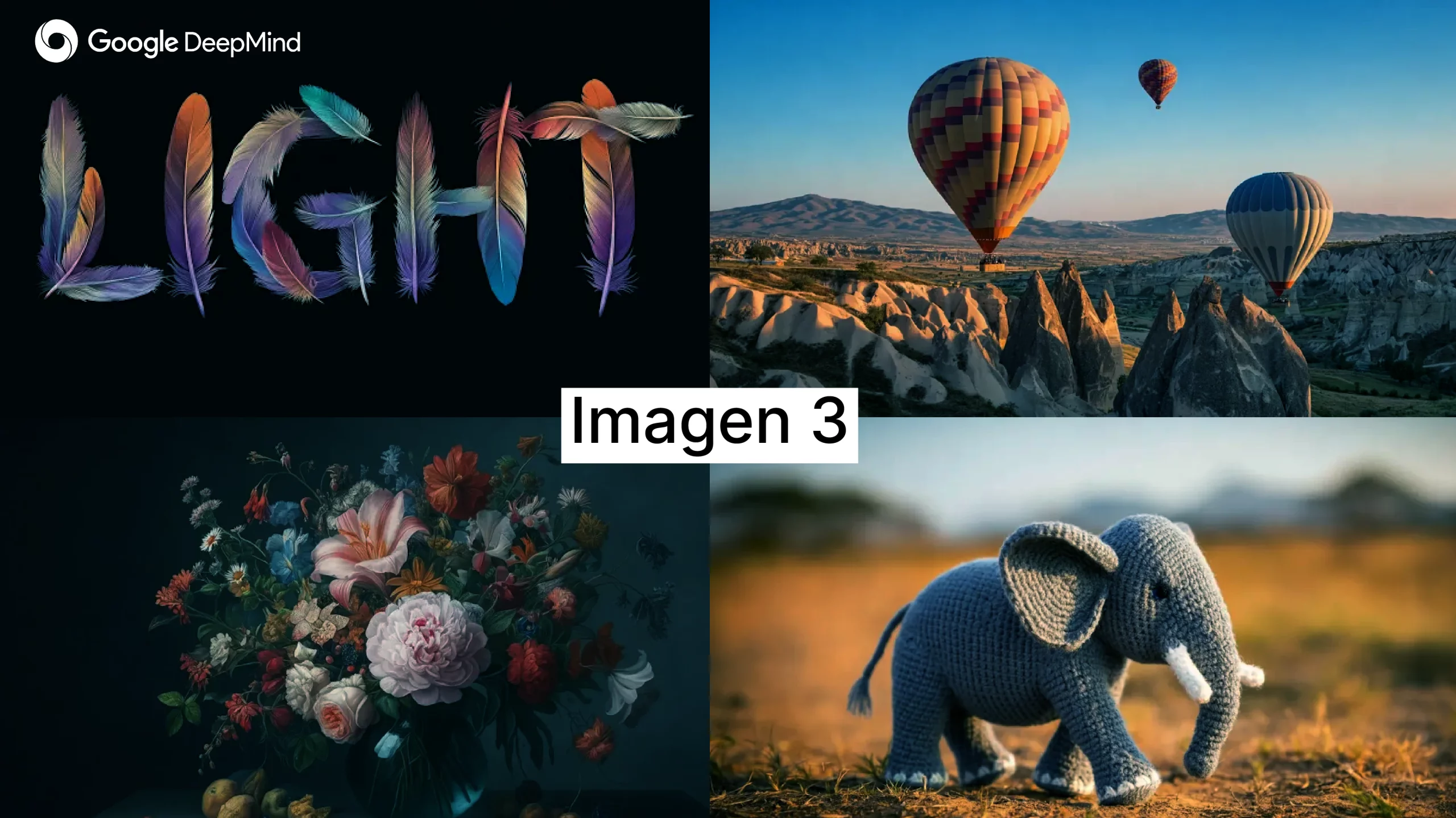
Short description: Imagen 3 is Google’s flagship text-to-image diffusion model.
Improvements include:
- Photorealism
- Fine detail quality
- Edge sharpness
- Lighting accuracy
- Text rendering
Used by: creators, marketers, designers, AI imagery tools.
2.3 Veo – Text-to-Video Generation

Veo produces cinematic, smooth, film-like video quality.
Short description:
A next-gen video generation model capable of generating:
- Complex scenes
- Cinematic motion
- Camera movement
- Realistic lighting
- High-frame-rate sequences
Used for: filmmaking, ads, YouTube content, animations, creators.
2.4 MusicLM – AI Music Generation
Short description:
MusicLM allows users to generate musical compositions based on text descriptions, styles, moods, and instrument preferences.
Use cases:
- Background music
- Podcasts
- Creator content
- Music production prototypes
2.5 Chirp – Speech Recognition Model
Short description:
Google’s state-of-the-art speech-to-text model with multilingual accuracy.
Used in YouTube captions, Meet, Pixel Recorder, and enterprise applications.
2.6 Gemma Open Models
Short description:
Gemma models are lightweight, open-source alternatives to Gemini, designed for:
- Developers
- Researchers
- Startups
Includes:
- Gemma 2B, 9B, 27B
- Gemma 2.1 models
- PaliGemma (vision+language)
- GraphGemma
Used for embedding, fine-tuning, research, and on-device development.
2.7 Med-Gemini (Healthcare AI)
Short description:
A specialized model trained on medical datasets for:
- Diagnosis support
- Oncology imaging
- Clinical workflows
- Medical summarization
Google Developer Platforms

3.1 Google AI Studio – Gemini Development Hub
Short description:
A browser-based platform to build, prototype, and test applications using:
- Gemini API
- Agents
- Prompts
- Embeddings
- Multimodal uploads
Key features:
- Zero setup
- Rapid prototyping
- Model playground
- API key management
Perfect for developers starting with Google AI.
3.2 Project IDX
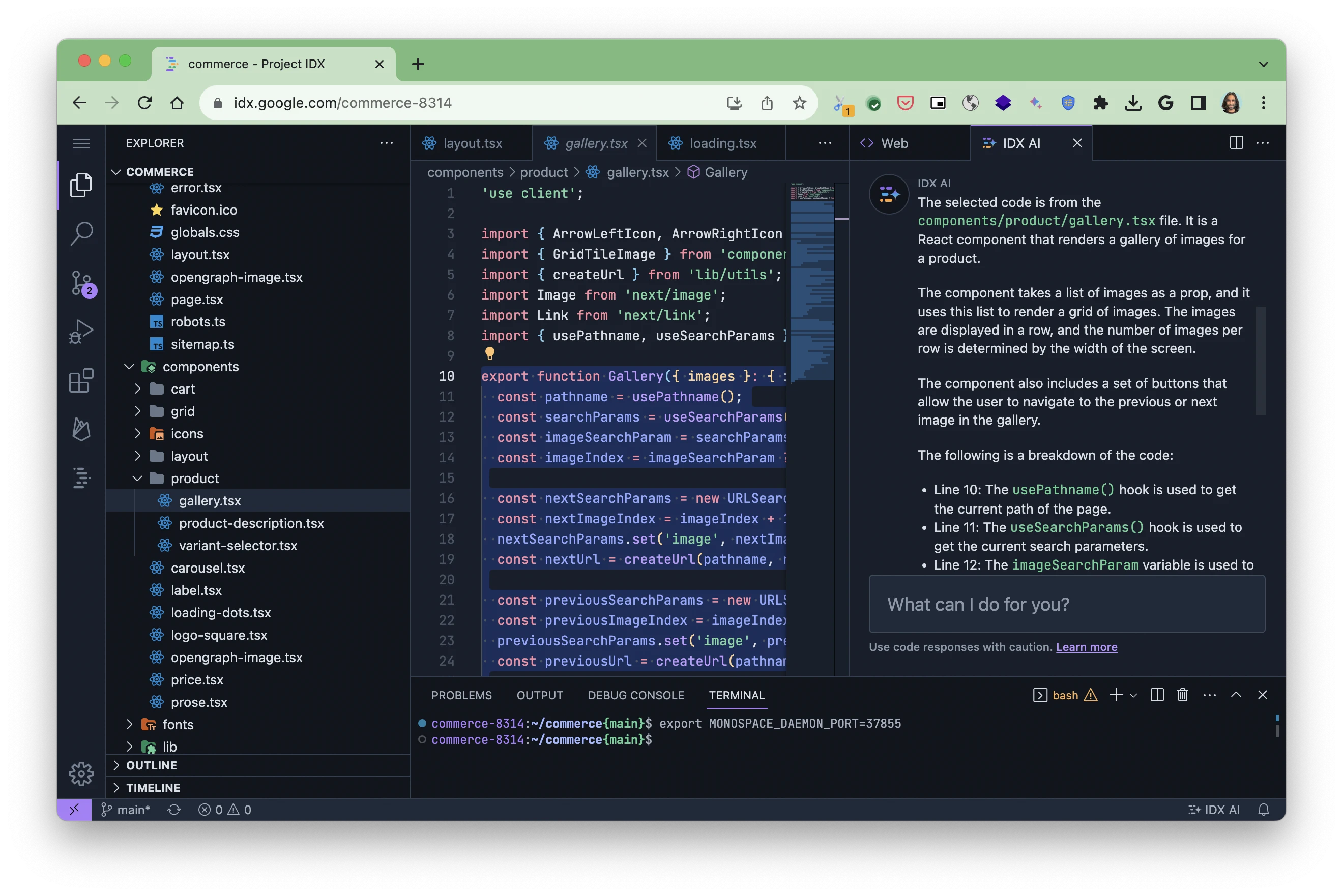
Short description:
Google’s cloud-based AI software development environment.
Capabilities:
- Builds Android, iOS, Web, Flutter, React, and AI apps
- Uses Gemini to generate, debug, and optimize code
- Auto-deploy web apps
- Collaborative development
3.3 Google Colab / Colab Pro

Short description:
Notebook environment for Python, AI experimentation, ML models.
Uses:
- Machine learning
- Data science
- Natural language pipelines
- Vision models
- Fine-tuning
3.4 Kaggle AI
Short description:
Global AI community platform with:
- 250,000+ datasets
- Model hosting
- Competitions
- Kernels
- AutoML utilities
3.5 TensorFlow, TFX, JAX
Short descriptions:
TensorFlow:
Deep-learning training and inference framework.
TFX:
Enterprise ML pipeline framework.
JAX:
High-performance numerical computing used by DeepMind.
3.6 MediaPipe
Short description:
Cross-platform AI pipeline framework used for:
- Gesture detection
- Face mesh
- Object tracking
- Pose detection
Widely used in real-time vision applications.
SECTION 4 — Enterprise Platforms (Vertex AI + Others)
Word count: ~700
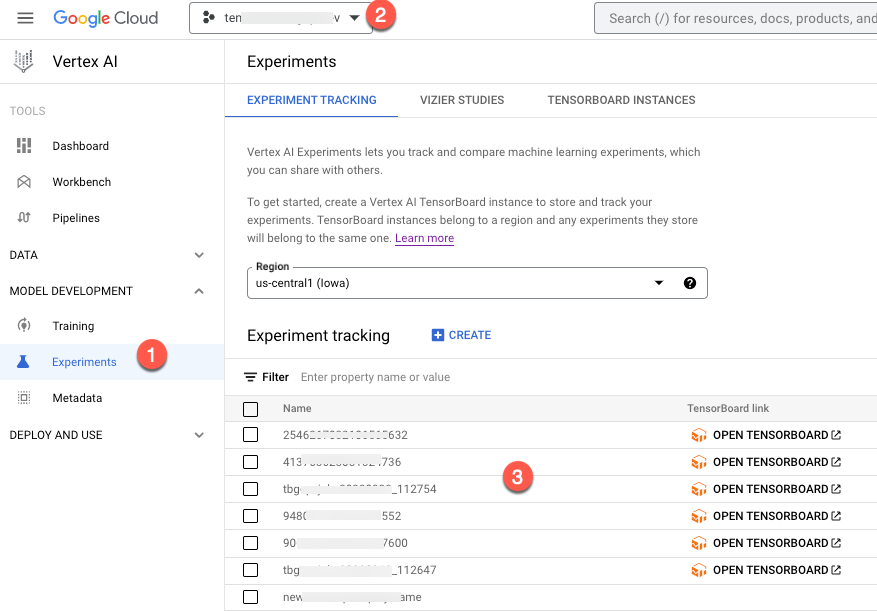
Google’s enterprise AI stack is designed for large-scale automation and production deployments.
4.1 Vertex AI (Full Platform)
Short description:
The main enterprise AI platform combining data, models, pipelines, and agent systems.
Vertex includes:
- Vertex AI Agents — enterprise-level AI agents
- Vertex AI Search — AI-powered search and retrieval
- Vertex AI Conversation — customer chatbots
- Vertex AI Vision — image & video recognition
- Vertex AI Evaluation — accuracy, safety analysis
- Vertex AI Pipelines — automated ML workflows
- Vertex AI Model Garden — hundreds of models
4.2 Document AI (DocAI)
Short description:
Extracts structured data from documents.
Supports:
- Invoices
- Bank statements
- Forms
- IDs
- Passports
- Insurance documents
Used for: BFSI, KYC, enterprise workflow automation.
4.3 Contact Center AI (CCAI)
Short description:
AI-powered customer support platform with voicebots, chatbots, agent-assist features.
4.4 BigQuery ML
Short description:
Train ML models directly inside Google’s cloud data warehouse.
4.5 Looker AI
Short description:
BI platform with AI-powered insights and dashboards.
Creative AI Platforms

Imagen
Short description: Generates high-quality images for advertising, design, creative work.
Veo

Cinematic text-to-video generation.
MusicLM
Audio and music creation.
YouTube Create
AI-assisted content editing:
- Auto-cuts
- Captions
- Filters
- Dream Screen
- Music generation
Productivity & Knowledge AI Tools
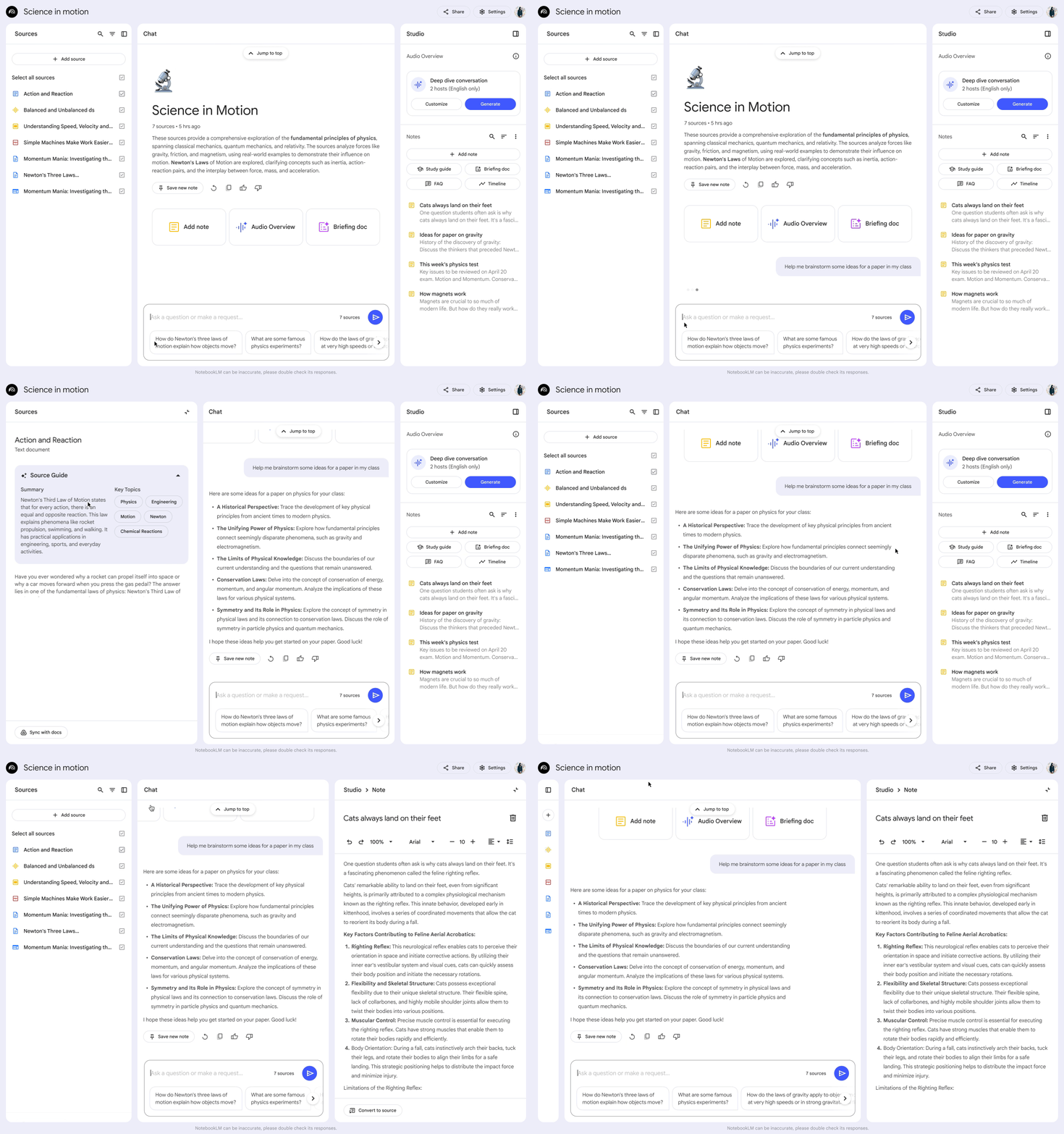

NotebookLM
Short description:
Google’s AI-powered research assistant for:
- PDF summaries
- Document comparison
- Knowledge-grounded answers
- Audio learning guides
- Research synthesis
Workspace AI
Includes:
- Gmail AI writing
- Docs generation
- Slides image creation
- Sheets formula generation
- Meet summaries
- Drive semantic search
Chrome AI

Writing assistance, auto summaries, page translation.
Android AI
Circle to Search, screen summarization, contextual guidance.
Pixel AI
Photo editing, Magic Editor, call screening.
Consumer AI Tools
Google Search AI (SGE)
Generative answers, visual reasoning, conversational search.
Photos AI
Magic eraser, face enhancements, generative edits.
Maps AI
Immersive 3D navigation and route intelligence.
Gemini App
Google’s official assistant for text, voice, image, and reasoning tasks.
Experimental Platforms (Latest + Emerging)
Antigravity (2025 Experimental Launch)
Short description:
A real-time multimodal agent system for:
- Simulated environments
- Action reasoning
- AI-native applications
- Robotics
- Physics-based modeling
UniSim

Short description:
Google’s universal world model for 3D simulation.
RT-X Robotics AI
Transforms how robots learn across multiple environments.
AlphaFold
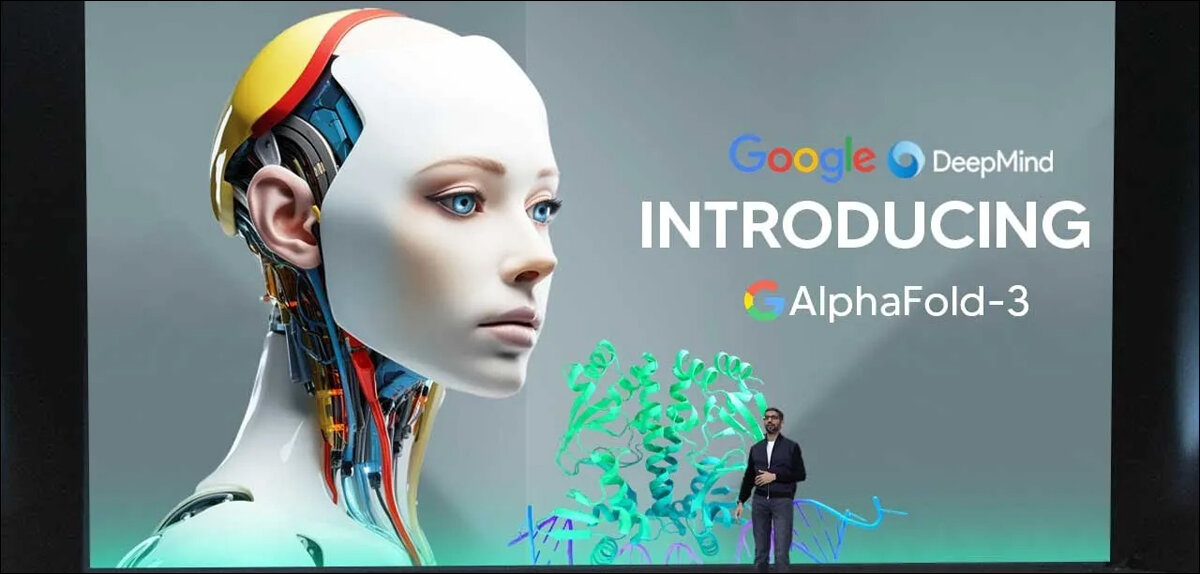
Predicts protein structures with extreme accuracy.
AlphaTensor & AlphaGeometry
AI models for solving mathematical problems and optimizing matrices.
How to Learn Google AI Tools (BEGINNER → EXPERT ROADMAP)
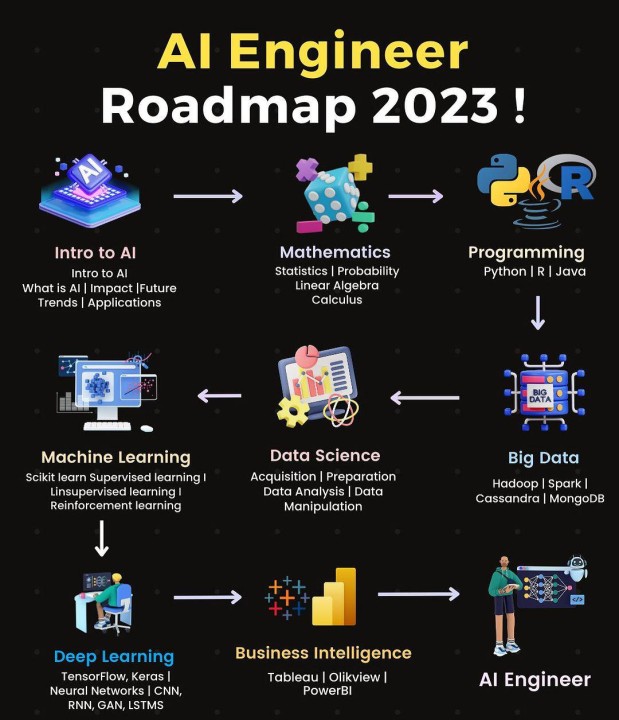
Level 1: Beginner (0–1 month)
Learn:
- Gemini App
- Workspace AI
- Chrome AI
- Google Photos AI
- NotebookLM basics
Skills:
- Prompting
- Document analysis
- Content creation
- Basic workflow automation
Level 2: Intermediate (1–3 months)
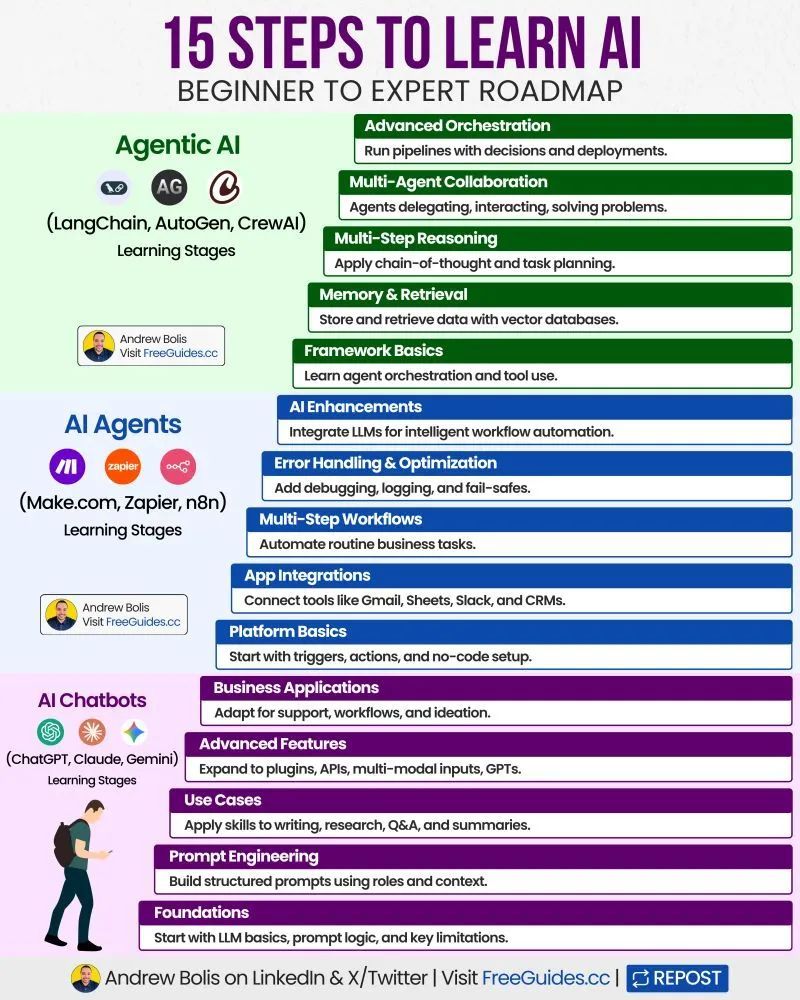
Learn:
- AI Studio
- Gemini API
- Colab basics
- Project IDX
- Document AI
Skills:
- Python basics
- APIs
- Data interpretation
- Simple automation
- App development
Level 3: Advanced (3–12 months)

Learn:
- Vertex AI
- Agents
- BigQuery ML
- JAX / TensorFlow
- Antigravity (when available)
- UniSim / RT-X for robotics
Skills:
- ML engineering
- Vector databases
- Enterprise automation
- Agent development
- Model evaluation
Future AI Jobs

Beginner Jobs
- AI Research Assistant
- AI Content Creator
- Workspace AI Expert
- Knowledge Analyst
- AI Customer Support Specialist
Intermediate Jobs
- AI Workflow Automation Engineer
- Gemini API Developer
- Document AI Analyst
- AI Solutions Consultant
- Data Analyst (BigQuery ML)
Advanced Jobs
- Vertex AI Engineer
- Enterprise AI Architect
- AI Agent Developer
- Robotics AI Engineer
- AI Safety & Evaluation Specialist
- Bio-AI Research Scientist (AlphaFold)
Final Roadmap to Become AI-Ready by 2030

Steps:
- Master Gemini + Workspace
- Learn development tools (AI Studio, IDX)
- Build projects (apps, automations, content)
- Learn Vertex AI
- Specialize in a field
- Get certified
- Build portfolio
- Apply for high-income AI roles





Comments
15
I appreciate you sharing this blog post. Thanks Again. Cool.
Great information shared.. really enjoyed reading this post thank you author for sharing this post .. appreciated
Strong points and clear examples. Please write more on this topic.
Wonderful post — practical and well-researched. Subscribed!
Thoughtful points and well-supported arguments. Good job!
Great topic and excellent execution. Subscribed for updates.
I just like the helpful information you provide in your articles
There is definately a lot to find out about this subject. I like all the points you made
I truly appreciate your technique of writing a blog. I added it to my bookmark site list and will
Good post! We will be linking to this particularly great post on our site. Keep up the great writing
I appreciate you sharing this blog post. Thanks Again. Cool.
This was beautiful Admin. Thank you for your reflections.
There is definately a lot to find out about this subject. I like all the points you made
This is really interesting, You’re a very skilled blogger. I’ve joined your feed and look forward to seeking more of your magnificent post. Also, I’ve shared your site in my social networks!
The examples were spot on. Can you post more like this?